Anthropic introduced a new life sciences research group and Bay Area laboratory — and shared early results from one of its first programs: Claude agents searching DNA sequence databases spotted a previously uncharacterized enzyme system with a CRISPR-like DNA repeat array. Anthropic calls it ART — array-associated reverse transcriptases.
The claim is discovery workflow, not a ready gene-editing product. Function is still unknown. Anthropic is publishing early (news post + pre-print) to show what agent-scale genome mining can surface and to invite collaboration.
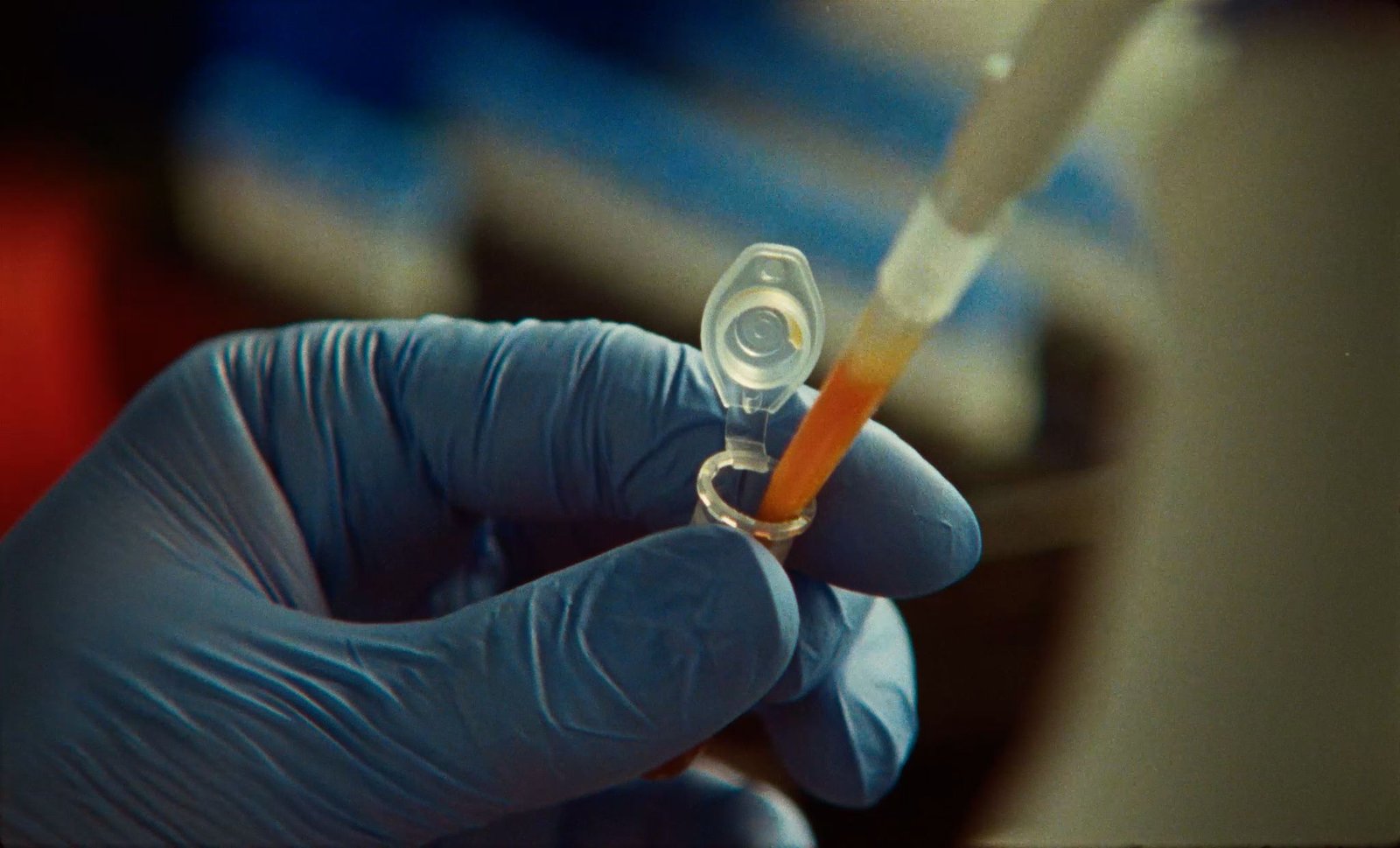
Image credit: Anthropic
Key points
- What shipped: Early results from Anthropic’s new life sciences lab: Claude agents discovered ART in bacteriophages — reverse transcriptase (RT) + partner gene + long CRISPR-like DNA repeat array.
- Scale (vendor): Roughly 950 agents, 21 hours, about 210 million tokens searching DNA databases after a high-level scientist prompt.
- Novelty claim: The underlying RT in a jumbo phage was known from prior studies; Claude appears first to notice the associated non-coding DNA repeat array and an accessory protein of unknown function.
- Early wet-lab signal: ART array expressed as a set of distinct short RNAs in first experiments — suggestive, not a full mechanism.
- Lab posture: Bay Area molecular biology lab; BSL-1 / BSL-2 only; no human-infecting pathogens; humans perform wet lab; Claude used via Claude Science, Claude Code, and a parallel-agent harness.
- External voice: Feng Zhang (MIT / Broad) called it an exciting example of AI agents contributing to biological discovery and urged further investigation.
- Caveats: Function unknown; programmable DNA-tool analogy is Anthropic’s framing based on shared characteristics with a handful of known systems — not a demonstrated cut/copy/paste toolkit yet. 9to6AI has not audited the pre-print experimentally.
What shipped
Anthropic’s life sciences group aims to use Claude for fundamental biology: mine DNA datasets for uncharacterized protein families, generate hypotheses at scale, and test survivors in the lab. The ART campaign is one of the first public results.
ART (as described by Anthropic) has three parts, found mainly in bacteriophages (viruses that infect bacteria):
| Part | Role in the announced system |
|---|---|
| Reverse transcriptase (RT) | Copies RNA into DNA; odd-looking family member that drew deeper inspection |
| Partner / accessory gene | Adjacent gene of unknown function |
| DNA repeat array | Long stretch of evenly spaced non-coding repeats — layout reminiscent of a CRISPR array |
Claude agents first surveyed reverse transcriptases at scale (Anthropic says they gathered 200,000+ RTs, produced ~3,500 candidate systems, and narrowed to about 20 compelling human-readable reports). One agent, reading raw DNA next to an unusual RT, flagged a tandem repeat array — language in the post quotes the agent calling it “spectacular” and CRISPR-like. Follow-up counting, spacing, literature search, and human review led to the ART label and lab work.
Tools named in the post: the same Claude Science and Claude Code products available to outside scientists, plus an internal harness that runs many Claude sessions in parallel. Scientists write the initial prompt and run wet-lab experiments; agents do the database combing, family analysis, and candidate reports.
What changed
Genome mining for odd RTs and immune-like systems is not new — CRISPR itself started as unusual repeats noticed in bacterial DNA, and many recent RT families were found computationally. What Anthropic is stressing is agent-scale systematization: hundreds of parallel sessions, machine-written candidate reports, human taste filters on what is worth testing, and feedback into prompts so Claude mimics scientific judgment.
Two honesty separators matter for builders and scientists:
- Association ≠ mechanism. ART’s co-occurrence of RT + accessory + repeat array is the discovery. Early RNA expression of the array is a hint. How (or whether) ART cuts, copies, or pastes DNA is not yet known.
- Humans still own the wet lab. Anthropic is explicit that BSL-1/BSL-2 work is done by people; AI is not pipetting in this workflow. Biosafety framing is low-risk lab only.
Feng Zhang’s quote supports the process claim — AI agents can contribute to spotting intriguing biology — without endorsing a finished tool.
What it means for builders and scientists
1. Treat this as a genome-mining / hypothesis-generation demo, not a CRISPR successor drop.
If you build bioinformatics agents, the interesting product surface is campaign design: survey → reproduce known results → hunt genomic neighbors → write falsifiable candidate reports → human triage → wet lab. ART is one survivor of that funnel.
2. Parallel agent harnesses change throughput, not scientific standards.
~950 agents / 21 hours / ~210M tokens is a capacity number. The scarce resource remains: which candidates a trained scientist will fund for expression and structure work. Anthropic says hypotheses themselves are now an object of study — what separates “worth testing” from noise.
3. Use the same product stack Anthropic names if you want to replicate the workflow, not the result.
Claude Science + Claude Code are the public tools cited. Expect to bring your own database access, literature discipline, and lab partners. Anthropic invites proposals for research questions to extend the approach.
4. Keep claim language tight in your own writing and decks.
“Claude found CRISPR-like repeats next to an RT” is grounded. “Claude invented a new gene editor” is not what the post says.
5. Watch collaboration and follow-up experiments.
Anthropic is sharing early to attract outside scientists. Mechanism papers, independent reproductions, and whether ART becomes a programmable tool class will decide if this was a one-off anecdote or a lasting method story.
What to watch
- Pre-print detail vs news summary — structure, prevalence across phages, and how hard the novelty claim is to falsify.
- Follow-up biochemistry: does ART perform programmable DNA/RNA operations, or something else entirely?
- How far Anthropic opens the parallel-agent harness vs leaving labs to DIY on Claude Science / Claude Code.
- Independent labs repeating the search and whether other ART-like systems appear.
- Broader industry move: more AI labs standing up wet-lab teams with strict BSL ceilings and human-in-the-loop experiment ownership.